RCS: From Zero to Hero
In the ever-evolving world of mobile communication, Rich Communication Services (RCS) has emerged as a transformative force, bridging the gap between traditional SMS and modern, feature-rich messaging apps. Once a niche standard struggling for adoption, RCS is now poised to become the default for billions of users. This blog explores RCS from its fundamentals to its future potential, highlighting its protocols, Google’s pivotal role, current applications, and what lies ahead. We’ll also address a key technical question for mobile network operators (MNOs): whether a new Short Message Service Center (SMSC) is required for RCS deployment.
What is RCS?
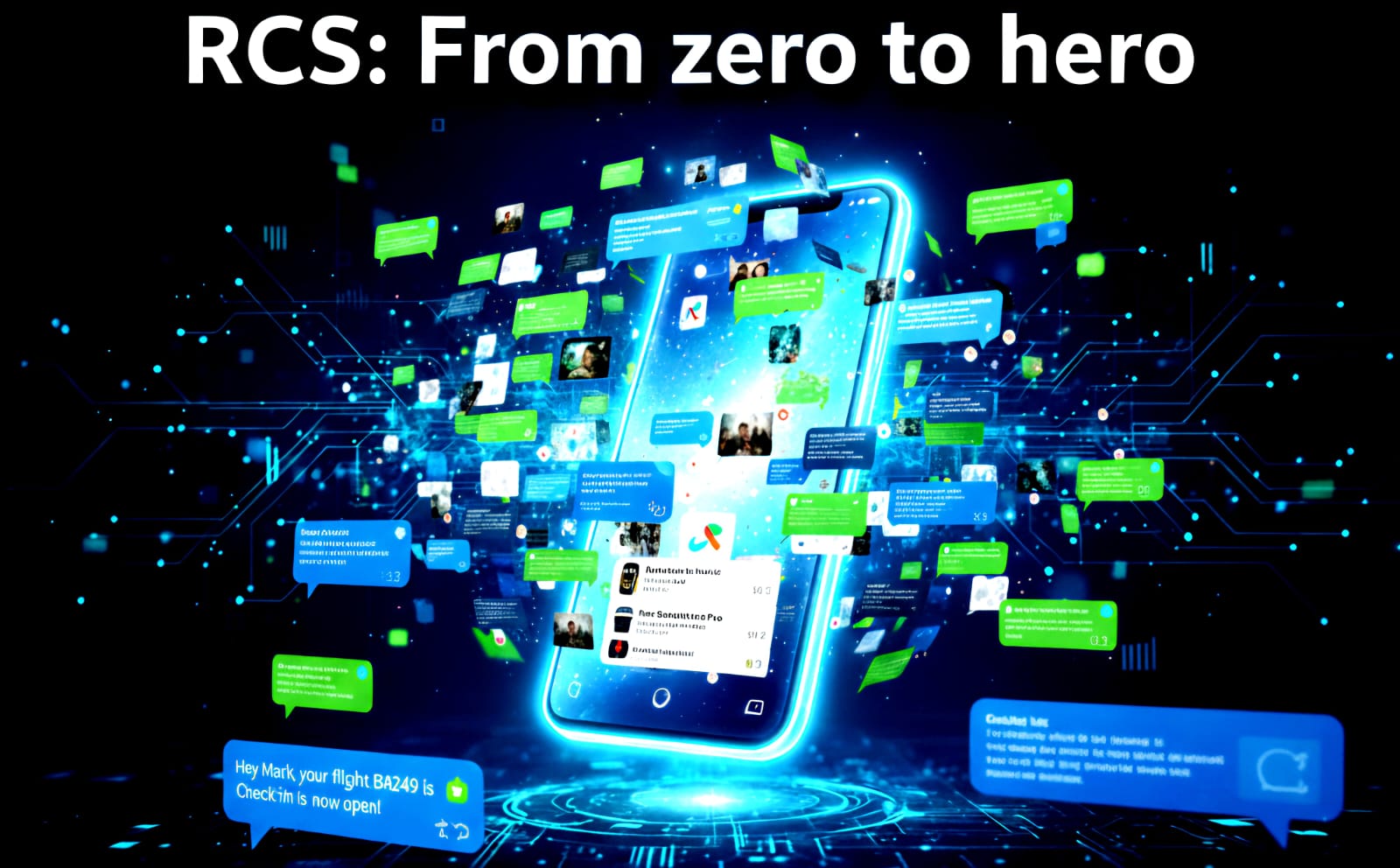
Rich Communication Services (RCS) is a communication protocol standard developed by the GSM Association (GSMA) to enhance mobile messaging beyond the limitations of SMS and MMS. Introduced in 2008, RCS aims to provide a richer, more interactive experience directly within native messaging apps on smartphones. It supports features like high-resolution media sharing (photos, videos, audio), read and delivery receipts, typing indicators, group chats, location sharing, and even interactive elements such as buttons and carousels for businesses.
Unlike SMS, which is limited to 160 characters and basic text, RCS enables “conversational” messaging that feels more like apps such as WhatsApp or iMessage. It’s designed for both person-to-person (P2P) and application-to-person (A2P) communications, making it versatile for consumers and businesses alike. RCS operates over an IP network, using mobile data (LTE/5G) or Wi-Fi, rather than traditional cellular voice channels.
Protocols and Platforms Used by RCS
RCS is built on a foundation of established internet protocols, ensuring compatibility and scalability. The core protocol stack includes:
- Session Initiation Protocol (SIP): Used for establishing and managing communication sessions, such as initiating chats or calls.
- HTTP/HTTPS: Handles file transfers, rich media uploads, and API interactions for business messaging.
- Message Session Relay Protocol (MSRP): Facilitates the actual exchange of messages and media in real-time sessions.
RCS runs on the IP Multimedia Subsystem (IMS) platform, a standardized architecture for delivering multimedia services over IP networks. The GSMA’s Universal Profile defines a consistent implementation, ensuring interoperability across devices and carriers. For business use, platforms like Google’s Jibe RCS hub provide backend infrastructure, enabling features such as verified sender profiles and chatbots.
Regarding deployment for MNOs: No, an MNO does not need to install a new SMSC for RCS to work. SMSCs are specific to legacy SMS routing, while RCS leverages IMS cores and RCS Application Servers (AS). Existing SMSCs can coexist for fallback to SMS, but RCS requires IMS upgrades or integrations rather than SMSC replacements.
Google’s Role in RCS
Google has been instrumental in elevating RCS from a theoretical standard to a global reality. Since 2016, the company has integrated RCS into its Android Messages app (now Google Messages), providing end-to-end support for features like encryption and cross-carrier compatibility. Google’s Jibe platform serves as a cloud-based RCS hub, allowing carriers to outsource backend infrastructure and accelerate adoption without heavy investments.
A major milestone was Google’s advocacy for Apple’s adoption of RCS in iOS 18 (2024), enabling seamless messaging between Android and iPhone users. By 2025, Google’s efforts have led to over 1 billion daily RCS messages in the US alone, with partnerships like Samsung further driving interoperability. Essentially, Google has acted as the catalyst, pushing MNOs and OEMs toward a unified RCS ecosystem.
How Google changed the game
| Google Initiative | Impact |
| Acquisition of Jibe Mobile | Gave Google an RCS cloud platform |
| Launch of Jibe Cloud & Jibe Hub | Operators can use hosted RCS instead of deploying everything locally |
| Integration with Android Messages | Made RCS the default messaging experience for most Android users |
| Support for the Universal Profile | Ensured global interoperability rules |
| Enabling E2EE encryption (where possible) | Increased user trust and privacy |
Present Uses of RCS
Today, RCS is widely used for both personal and business communications, enhancing engagement and efficiency. Key applications include:
- Consumer Messaging: High-quality media sharing, group chats with up to 100 participants, and real-time typing indicators in apps like Google Messages.
- Business-to-Consumer (B2C): Personalized promotions with carousels, automated notifications (e.g., delivery updates), 24/7 chatbots for support, and feedback requests with quick-reply buttons.
- Industry-Specific: Retail for product previews, banking for secure verifications, healthcare for appointment reminders, and travel for interactive itineraries.
With Apple’s support, RCS is now cross-platform, reducing fragmentation and enabling features like end-to-end encryption in some implementations.
The Future of RCS
Looking ahead to 2026 and beyond, RCS is set to dominate mobile messaging, with traffic projected to grow 50% in 2025 alone, reaching 50 billion business messages globally. The market value could quadruple by 2031, driven by Apple’s integration and expanding features like AI-powered chatbots, augmented reality elements, and deeper e-commerce integrations.
Future developments may include web-like experiences (e.g., embedded payments, video calls within chats) and broader adoption in IoT devices. Challenges like privacy concerns and carrier monetization persist, but with over 30 billion RCS messages expected annually by 2025, it’s clear RCS is evolving into the universal standard for rich, secure communication.
Conclusion
From its humble beginnings as a GSMA initiative to its current status as a hero in mobile messaging, RCS has revolutionized how we connect. Backed by protocols like SIP and IMS, propelled by Google’s innovation, and already powering interactive experiences, RCS’s future is bright—promising a seamless, enriched world of communication. For MNOs, the path forward involves IMS enhancements rather than overhauling legacy systems like SMSCs, making adoption more feasible than ever. As we move into 2026, RCS isn’t just an upgrade; it’s the new normal.
Taking the leap into RCS doesn’t have to be a complex technical hurdle; it is an opportunity to connect more deeply with the world around you. At Hacom Technologies, we invite you to view us not just as a service provider, but as a true partner in your innovation. Whether you are refining a specific project or transforming an entire communication network, we are here to support you with kindness, deep technical expertise, and a shared commitment to your success. Please feel free to reach out—we would love to listen to your vision and help you bring your next-generation messaging solutions to life.