
AI Applied to Geolocation Data: Mapping the Future of Intelligence
Geolocation data has become one of the most valuable signals in the digital world. Every time a device connects to a mobile network, a Wi-Fi access point, a payment terminal, a delivery route, or a navigation app, it leaves location clues behind. On their own, these signals may seem ordinary. With AI, they become a rich source of insight that can improve security, operations, customer experience, and decision-making.
The real power of geolocation data is not just in knowing where something happened. It is in understanding patterns: where people move, when they move, what routes they prefer, what locations attract abnormal activity, and how risk changes over time. AI is particularly good at finding those patterns at scale.
The AI Difference: From “Where” to “Why”
Traditional geolocation tools simply show a dot on a map. AI goes further by looking for patterns, context, and intent. By applying machine learning to LBS data, systems can understand the “semantic meaning” of a location.
For example, AI can distinguish between a user sitting in a parked car (stationary) and a user sitting in a café (dwelling), allowing for vastly different insights even if the coordinates are nearly identical.
1. Transforming Business through Location Intelligence
For the business world, AI-driven geolocation data is the ultimate “competitive edge.” It allows companies to move away from guesswork and toward data-driven precision.
Hyper-Personalized Marketing
AI doesn’t just wait for you to walk into a store. It analyzes your historical movement patterns to predict when you are likely to go shopping. By using “predictive geofencing,” a retailer can send a personalized discount code to your phone exactly ten minutes before you usually walk past their storefront.
Strategic Site Selection
Before opening a new branch, store, or office, companies want to know where demand exists. AI can combine demographic data, traffic flows, competitor presence, and local movement patterns to estimate where a new location is most likely to succeed.
Supply Chain & Logistics Optimization
In logistics, “the last mile” is the most expensive. AI uses geolocation data to optimize routes in real-time. Unlike basic GPS, which reacts to current traffic, AI predicts future congestion based on historical trends, weather, and local events, ensuring that delivery fleets remain as efficient as possible.
Telecommunications and network planning
For telecom operators, geolocation data helps with coverage optimization, capacity planning, service quality monitoring, and network troubleshooting. AI can identify underperforming areas, estimate congestion, and recommend infrastructure improvements.
2. Elevating Security and Public Safety
Beyond commerce, the marriage of AI and geolocation is a critical component of modern safety infrastructure.
Fraud Detection and Prevention
Financial institutions use AI to monitor “Impossible Travel.” If your credit card is used in New York and then three minutes later in London, the AI flags the transaction. By cross-referencing the transaction location with your phone’s LBS data, the system can instantly verify if you are actually present at the point of sale.
Disaster Response and Crowd Management
During large-scale events or natural disasters, AI can monitor “signal density” to identify dangerous overcrowding before it happens. In the event of an earthquake or flood, AI heatmaps can show rescue teams exactly where the highest concentration of people are located—even in areas where traditional communication has been disrupted.
Missing asset and fleet protection
For high-value transport or sensitive infrastructure, AI monitors movement for “unexplained deviations.” If a truck carrying sensitive cargo stops in an unusual or risky location or takes an unapproved detour, an AI system can trigger an immediate security protocol, often before the driver even realizes there is a problem.
Threat detection
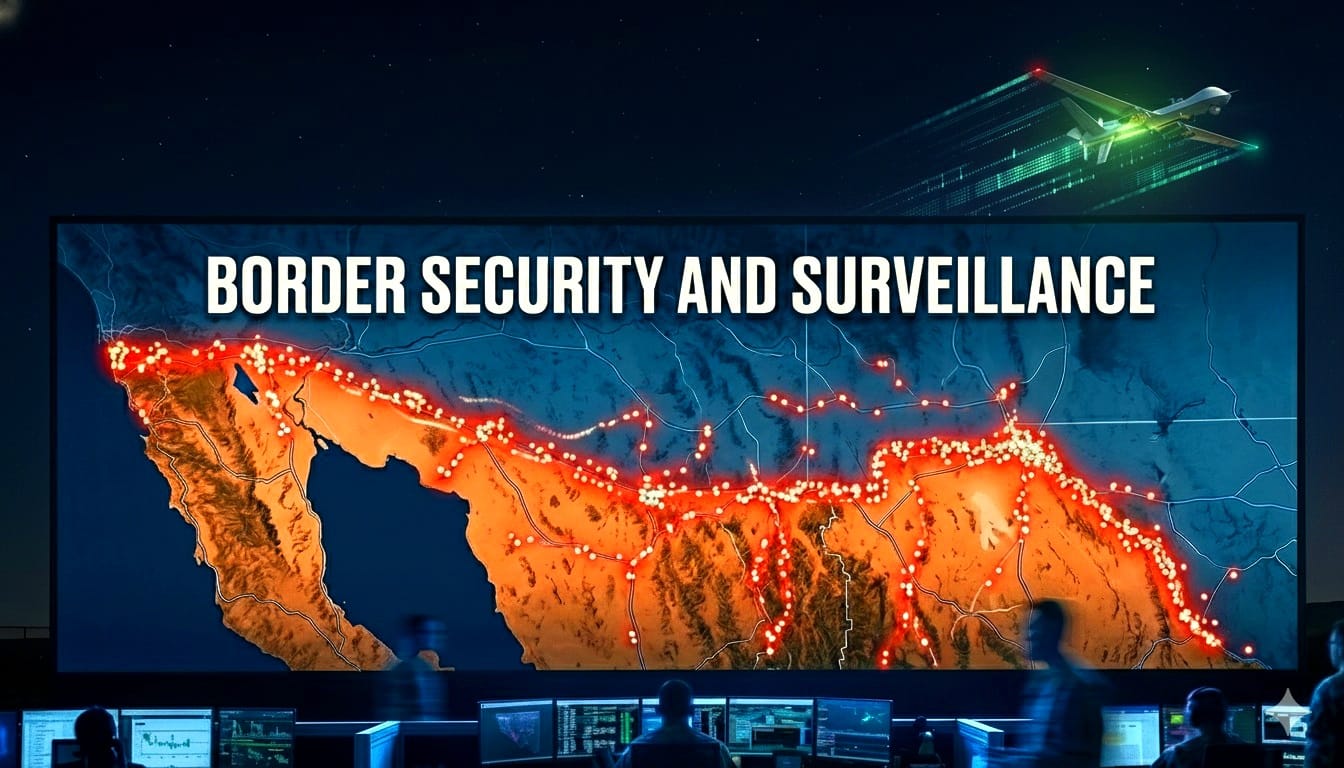
For physical security, AI can identify unusual movement around restricted sites, detect repeated presence near sensitive facilities, or highlight suspicious routes near critical infrastructure. It can also help security teams prioritize alerts by separating normal movement from behavior that appears coordinated or repeated.
3. The Technical Engine: How AI Processes the Map
To turn dots into insights, AI employs several sophisticated techniques:
- Clustering (K-Means): This allows to group coordinates to identify “hotspots”—frequently visited locations like homes, offices, or favorite parks.
- Sequential Modeling: By looking at the order of locations visited, AI can predict a user’s destination with startling accuracy.
- Time-Series Analysis: This identifies how location patterns change over hours, days, or seasons, helping businesses prepare for “peak” times.
How AI adds value
AI improves geolocation analytics in four major ways.
- First, it helps clean and enrich data. Real-world location data is messy. Signals drift, timestamps mismatch, devices jump between towers, and coordinates may be incomplete. Machine learning models can smooth noisy tracks, infer missing points, and improve accuracy by combining multiple sources.
- Second, AI finds patterns humans miss. A city map with millions of location points is hard to interpret manually. AI can segment users or vehicles into behavioral groups, reveal movement corridors, identify repeated stop patterns, and uncover regional trends.
- Third, AI enables prediction. Location is not only historical; it is often a strong predictor of what happens next. AI can estimate crowd growth, likely arrival times, probable delivery delays, and future congestion points.
- Fourth, AI supports decision automation. Instead of just generating reports, models can trigger alerts, reroute vehicles, flag suspicious activity, or recommend operational changes in near real time.
The Ethical Frontier: Privacy in the Age of AI
With great power comes great responsibility. The use of AI in geolocation raises valid privacy concerns. The industry is moving toward Differential Privacy and Anonymized Aggregation—techniques that allow AI to learn from the movement of crowds without ever being able to identify or track an individual person.
The goal is to build systems that provide value and safety while respecting the “digital sovereignty” of every user.
Conclusion
AI applied to geolocation data is far more than digital mapping. It transforms movement into meaningful intelligence that organizations can use to improve security, efficiency, customer experience, and strategic planning. From fraud prevention and anomaly detection to logistics optimization and smarter business expansion, the potential is broad and continues to grow as AI capabilities mature.
For organizations exploring new opportunities in this space, choosing the right technology partner can make all the difference. Hacom Technologies brings many years of experience delivering advanced solutions where location intelligence matters most. Whether the objective is stronger security, better operational visibility, or innovative business services, readers are warmly invited to count on Hacom Technologies as a trusted and valuable partner for projects involving AI applied to geolocation data.