Private LTE/5G Networks: The New Frontier for Secure Critical Infrastructure
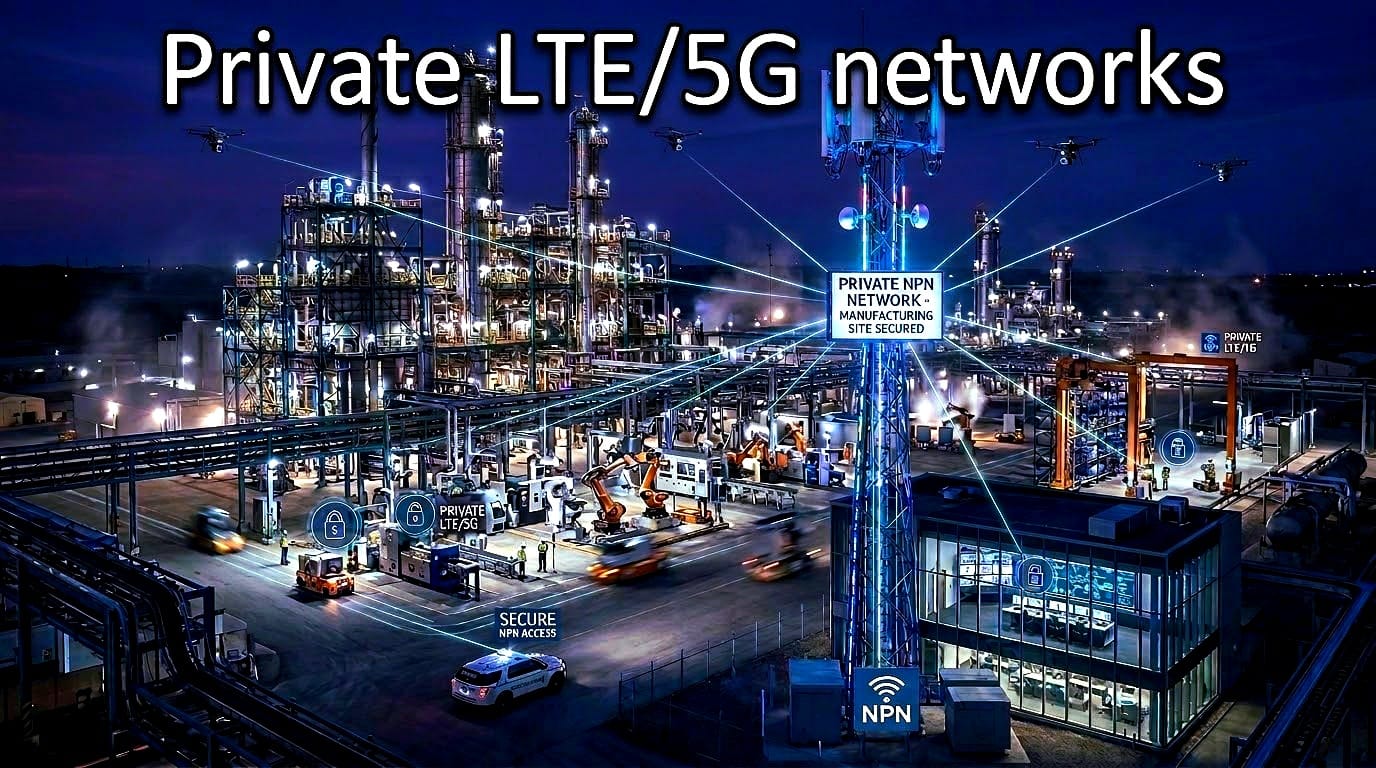
In an era where digital transformation is accelerating, private LTE/5G networks are emerging as a game-changer for critical infrastructure sectors. These dedicated, on-premises wireless networks provide enhanced security, reliability, and low-latency connectivity tailored to specific operational needs, unlike public cellular networks. With the global rollout of 5G and increasing cyber threats to essential services, adoption is surging—spending on private LTE/5G infrastructure is projected to exceed $7 billion annually by 2026. This blog explores key use cases in ports, airports, mining, energy, and border protection, while highlighting integrations with drones and lawful interception capabilities that ensure compliance without compromising performance.
Why Private LTE/5G Matters for Critical Infrastructure
Private LTE/5G networks offer isolated spectrum, customizable quality of service (QoS), and robust encryption, making them ideal for environments where downtime or breaches could have catastrophic consequences. They support massive IoT deployments, real-time data analytics, and automation, enabling sectors to achieve 30-70% productivity gains and up to 80% improvements in worker safety. As industries like transportation and utilities digitize, these networks provide a secure foundation, often complemented by edge computing for faster processing. Recent deployments, such as those at major ports and factories, underscore their role in building resilient, future-proof infrastructure.
Use Cases in Key Sectors
1) Ports and Maritime Transport
Ports are bustling hubs handling global trade, where connectivity gaps can lead to delays, safety risks, and inefficiencies. Private LTE/5G networks enable seamless communication across vast areas, supporting automated guided vehicles (AGVs), remote crane operations, and real-time cargo tracking via IoT sensors. For instance, operators like Maersk are deploying private LTE/5G on vessels and terminals to optimize berth management and predictive maintenance, reducing operational costs by over 20%. These networks ensure high-bandwidth video surveillance and asset monitoring, even in harsh maritime environments.
Drones integrated with private LTE/5G enhance port security by providing aerial inspections of containers and infrastructure, with low-latency control for beyond-visual-line-of-sight (BVLOS) operations. At the Port of Long Beach, such setups have minimized human exposure to hazards while improving response times.
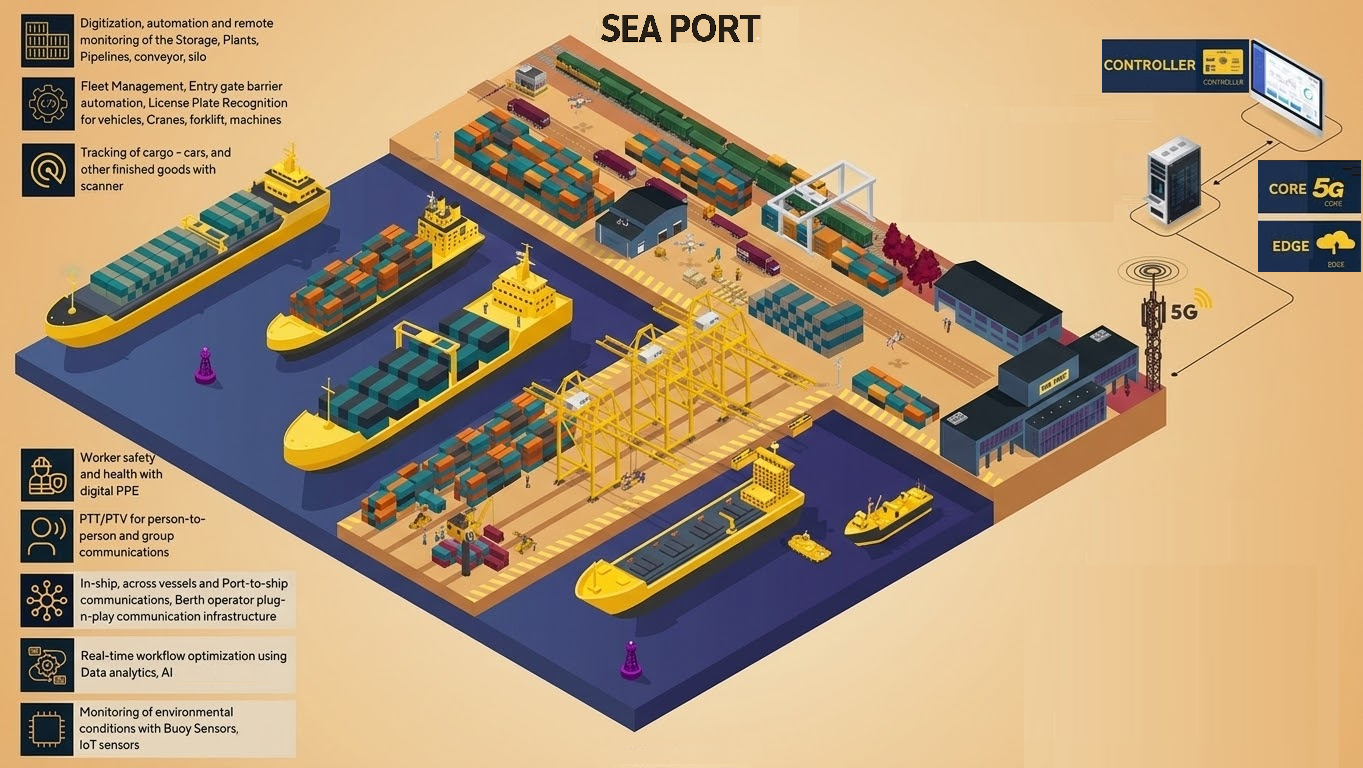
Private LTE/5G Solution – Sea Port
2) Airports and Aviation
Airports demand ultra-reliable connectivity for passenger services, ground operations, and security. Private LTE/5G networks facilitate smart terminal management, including AR-guided maintenance, automated baggage handling, and real-time passenger flow analytics. Deployments at hubs like Frankfurt Airport—Europe’s largest private network—have enabled self-driving shuttles and enhanced perimeter security, cutting transfer times and operational costs.
Integration with drones allows for runway inspections, emergency response, and wildlife monitoring, leveraging LTE/5G’s high-speed data for live video feeds and AI analysis. At Miami International Airport (MIA), CBRS-based private networks support drone fleets for rapid infrastructure assessments, ensuring compliance with FAA regulations.
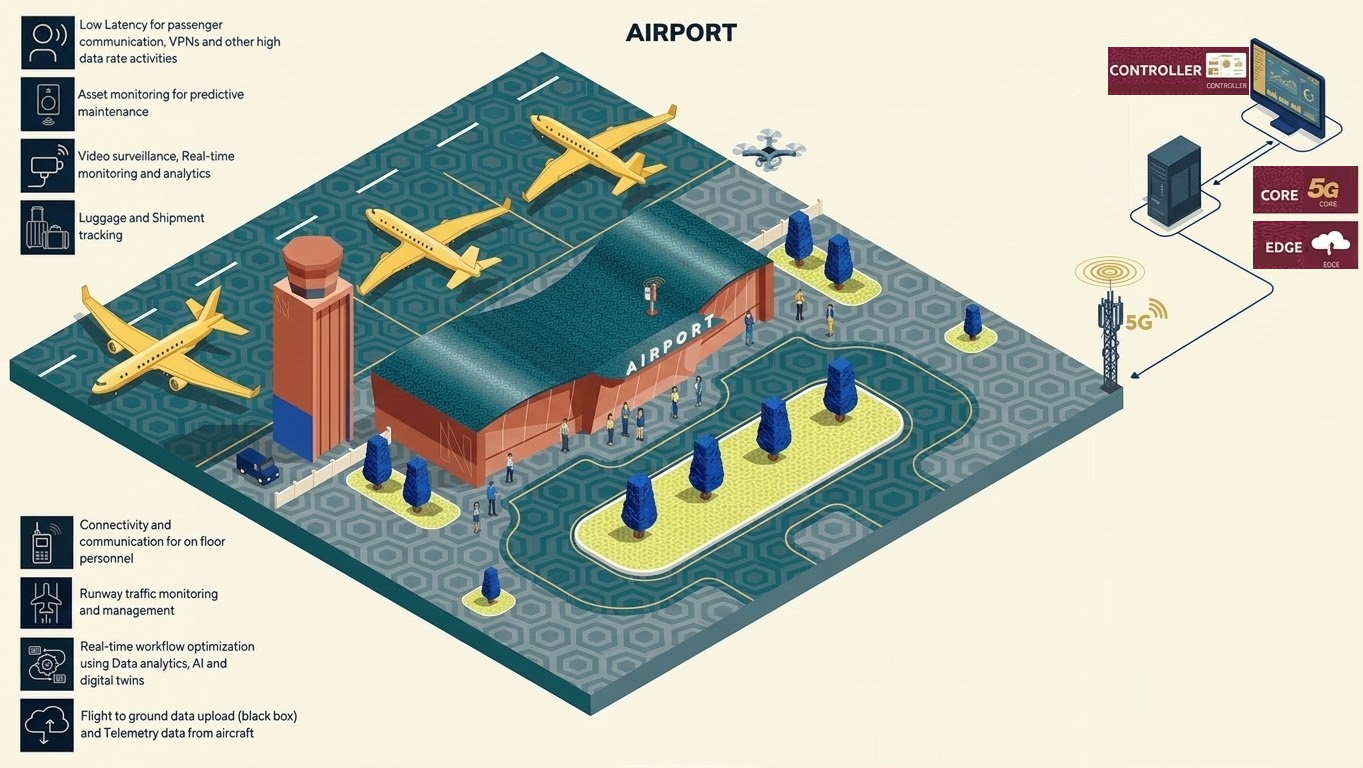
Private LTE/5G Solutions for Airports
3) Mining Operations
Mining sites, often remote and hazardous, benefit from private LTE/5G for underground and surface connectivity. These networks power teleoperated machinery, autonomous haul trucks, and real-time environmental monitoring, boosting efficiency and safety. Companies like BHP and Rio Tinto have rolled out private LTE/5G at sites, enabling predictive maintenance and fleet management across thousands of square kilometers.
Drones on private LTE/5G networks conduct site surveys, blast monitoring, and stockpile assessments, reducing the need for personnel in dangerous areas. In Brazil, private networks have transformed remote mining with drone-integrated systems for enhanced oversight.
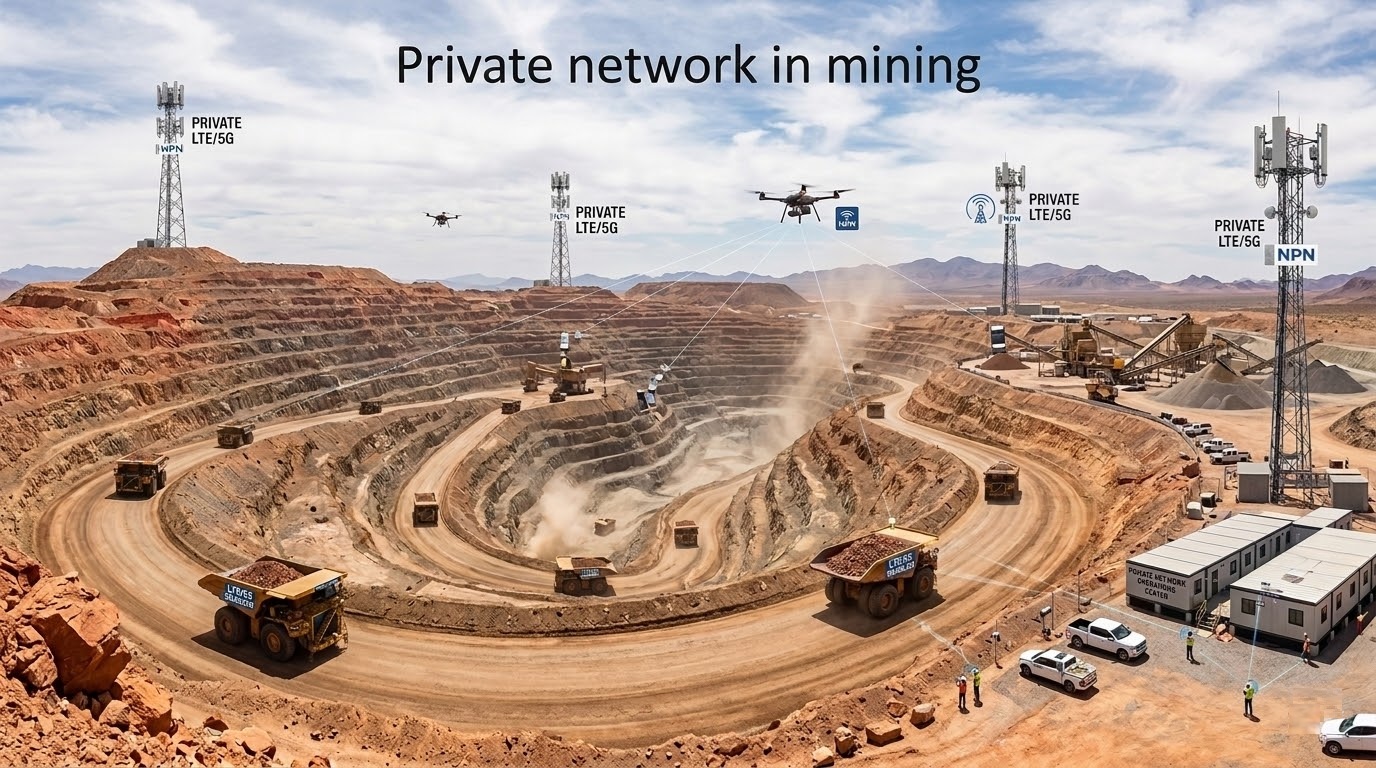
Making private network interconnect easy to configure, simple to operate, and widely adopted
4) Energy Sector
From oil rigs to renewable farms, energy infrastructure requires resilient networks for remote monitoring and automation. Private LTE/5G supports SCADA systems, predictive analytics for grid stability, and IoT sensors in substations or offshore wind farms. North Sea deployments use multi-band LTE/5G for offshore operations, improving data flow and reducing downtime.
Drones equipped with LTE/5G connectivity inspect pipelines, turbines, and solar arrays, delivering high-resolution imagery for maintenance. In wind farms, private networks enable drone swarms for real-time fault detection, enhancing energy output and safety.

Harnessing the Power of Private Networks for Offshore Energy: Revolutionizing Wind Farms with Cutting-Edge Connectivity
5) Border Protection
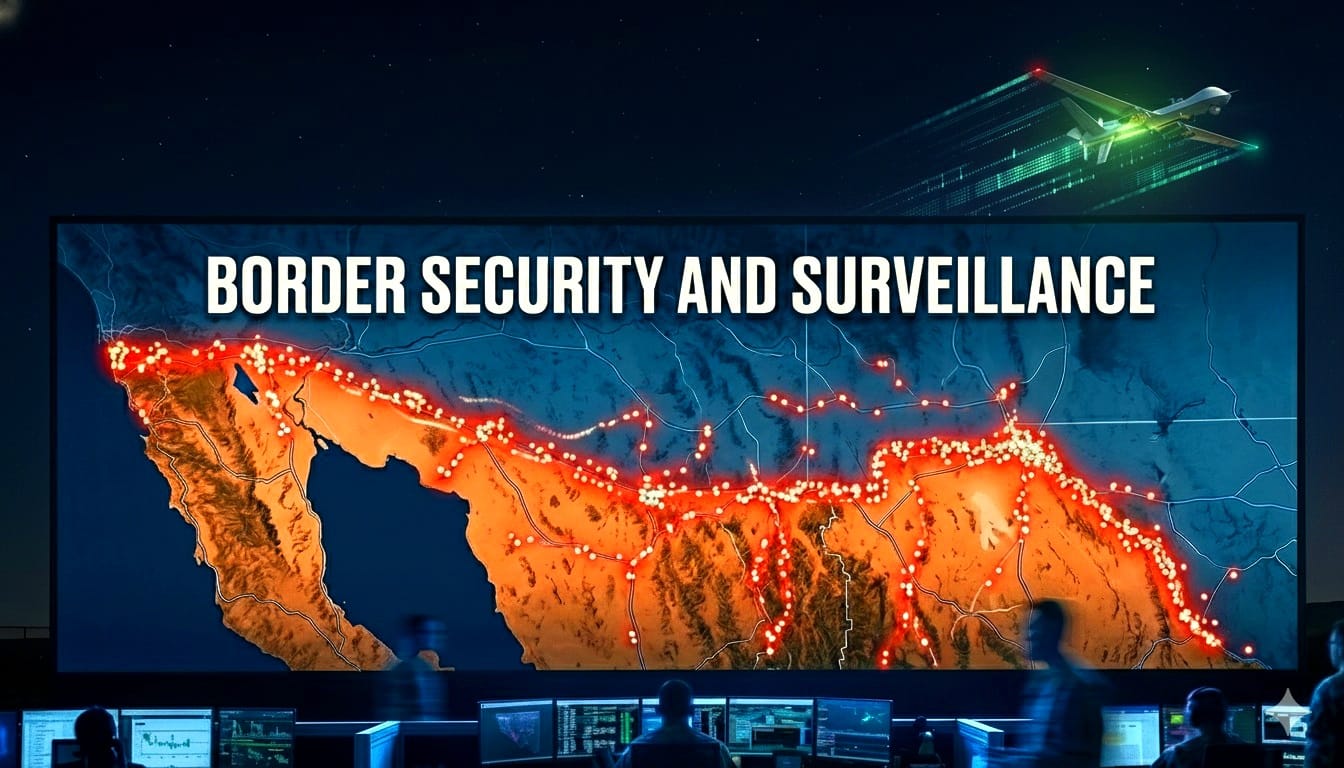
Border security involves vast, often rugged terrains where reliable communication is vital for surveillance and response. Private LTE/5G networks integrate sensors, cameras, and mobile units for real-time threat detection and coordination. In the U.S., hybrid networks support border patrols with high-speed data for AI-driven analytics.
Drones play a pivotal role, patrolling borders with LTE/5G-enabled BVLOS flights for monitoring illegal crossings or smuggling. Industry platforms combine private networks with AI drones for enhanced situational awareness in defense applications.
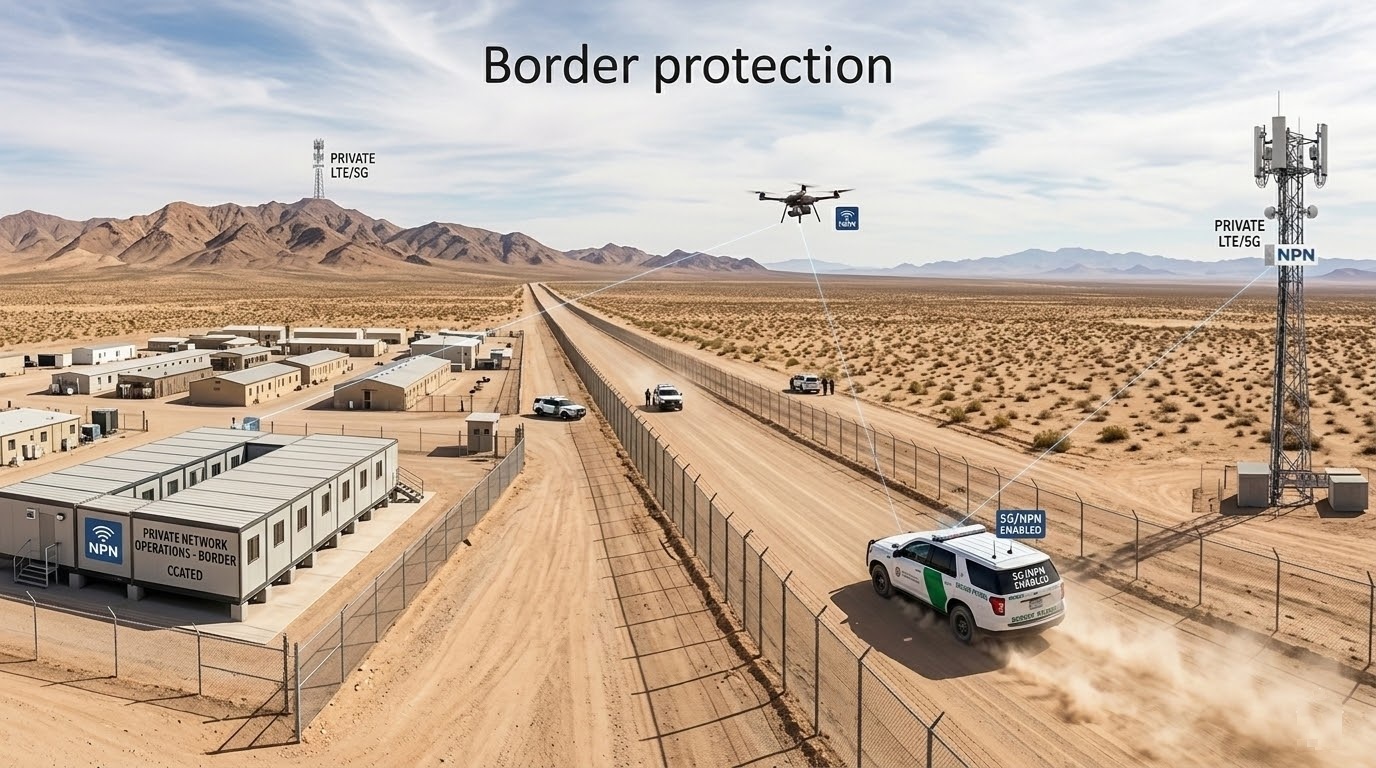
Drones as a service (DaaS) for private networks and blockchain-assisted IoT-based infrastructure
Integration with Drones: Enhancing Operations Across Sectors
Private LTE/5G networks unlock drones’ full potential by providing low-latency, high-bandwidth links for command-and-control, telemetry, and payload data. This enables drone fleets in critical infrastructure for inspections, delivery, and surveillance. In ports and airports, drones reduce manual checks; in mining and energy, they access hazardous zones; and in border protection, they extend patrol ranges. Blockchain-assisted IoT integrations further secure drone data in smart city setups. Industry tests show LTE/5G boosts drone efficiency with faster data and stronger security.
Lawful Interception: Balancing Security and Compliance
Private LTE/5G networks must support lawful interception (LI) to comply with regulations, allowing authorized access to communications for law enforcement. Unlike public networks, private setups integrate LI gateways per ETSI/3GPP standards, ensuring encrypted data can be decrypted only under warrant. In critical infrastructure, this is crucial for national security, with features like ID association in LTE/5G cores. Challenges include increased encryption, but solutions in telecom platforms enable scalable, compliant interception without disrupting operations.
Conclusion: A Secure Path Forward
Private LTE/5G networks are redefining critical infrastructure by delivering secure, efficient connectivity tailored to demanding environments. From automating ports to securing borders, their integration with drones and LI capabilities positions them as essential for resilience and innovation.
If you’re intrigued by the potential of private LTE/5G networks to transform your critical infrastructure —whether in ports, airports, mining, energy, or border protection— Hacom Technologies stands ready as a reliable partner. With expertise in telecom software platforms, including 3GPP-compliant solutions for messaging, location services, and lawful interception, we deliver tailored, secure deployments everywhere. For more details or to discuss your project, contact us and let’s innovate together!